Electrical Performance & Lithium Cell Design

At LARGE, we take a full-chain approach to electrical performance engineeringócovering cell selection, voltage platforms
capacity configuration, discharge-rate requirements, cycle life, and temperature adaptability.
Through system-level matching and rigorous validation, we ensure stable, reliable operation in high-power, high-reliability, and wide-temperature-range applications.

Why Electrical Performance Design Determines Final Device Performance?

Many device-level issues originate from poor alignment between the cell chemistry, voltage platform strategy, and thermal management. Common challenges include:
01
Unstable power output or startup failure
Insufficient voltage platforms or peak current capability can cause voltage drop, false protection triggers, and startup issues.
02
Gap Between Rated and Actual Runtime
Capacity and cycle life not matched to real operating conditions
• Premature aging
• Frequent battery replacement
03
Overheating under high load
Inappropriate C-rate selection or pack topology can result in over-temperature conditions and power derating.
04
Performance degradation due to cell inconsistency
Poor series-parallel design increases voltage deviation and accelerates capacity loss.
05
Inaccurate SOC and unexpected shutdowns
Suboptimal BMS algorithms cause inaccurate state-of-charge readings and imbalance issues.
06
High temperature sensitivity and poor environmental adaptability
Lack of thermal management leads to reduced low-temperature performance and accelerated aging at high temperatures.

System-Level Electrical Performance Customization for Lithium Batteries

Driven by application requirements and cost targets, we
deliver electrical performance customization from
material selection to system-level engineeringóensuring
an optimal balance between performance, reliability, and
total cost of ownership.

Cell Chemistry & Performance Customization

Cell Chemistry & Performance Customization

Based on application scenarios, safety levels, and cost objectives, we provide full-cycle cell customization—from chemistry selection to specialized performance tuning.

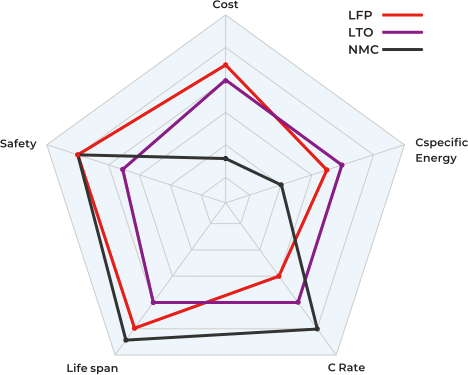
hicetea73 LFP – High safety & long cycle life

hicetea73 NCM – High energy density

hicetea73 LCO – Highvoltage platform

hicetea73 LMO – High power & thermal stability

Low-Temperature
Explosion-Proof
Non-Magnetic
Semi-Solid-State
Long-Life
High C-Rate

Voltage Platform Customization (3.2V-72V+)

Tailored voltage architectures based on load power, system efficiency, and space constraints:

hicetea73  Series / parallel cell & module topologies

hicetea73  Standard platforms: 12V / 24V / 36V / 48V / 60V / 72V

hicetea73  Scalable and modular voltage architectures

Capacity Customization (mAh - Ah)

Capacity is precisely configured to match real runtime targets
across portable and industrial systems.

hicetea73  Runtime-driven capacity configuration

hicetea73  Capacity tolerance within ±3%

hicetea73  Optimized balance of weight & energy density

Discharge Rate Customization (1-5C / 10C+ Peak)

Designed for fast startup, heavy-load driving, and high-power

hicetea73  High peak-current capability

hicetea73  High-frequency pulse load optimization

hicetea73  Dedicated high-power solutions

Cycle Life Engineering & TCO Optimization

Cycle life is engineered through coordinated optimization of
materials, voltage windows, and BMS strategies.

hicetea73  Extended-life systems: >3000 cycles

hicetea73  Industrial standard: 1000-1500 cycles

hicetea73  Cost-optimized solutions: 600-800 cycles
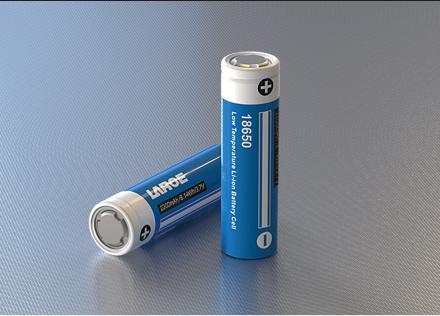
LARGE's Specialty Lithium Cell Solutions

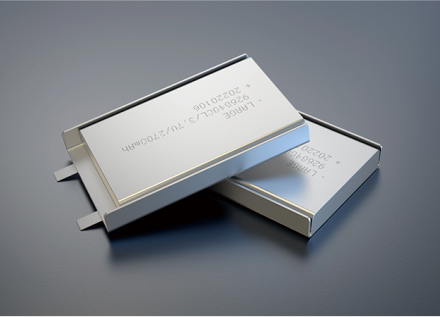
Low-Temperature Cell 18650 | 2200mAh

Low-Temperature Cell
18650 | 2200mAh

hicetea55  Certified for nail penetration and explosion-proof performance

hicetea55  -40°C, 0.5C discharge capacity >70%

hicetea55  Compliant with Ex ic IIB T4 Gc explosion-proof standards 
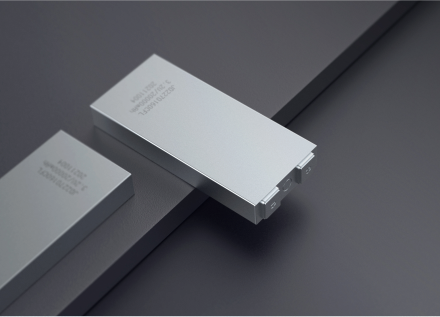
battery performance optimization

Low-Temperature LFP Cell
3.2V | 20Ah

hicetea55 Supports charging at -20°C

hicetea55 Passed nail penetration testing

hicetea55 -40°C, 3C discharge capacity ≥70%

Semi-Solid-State High Energy Density Cell

Semi-Solid-State High Energy
Density Cell

hicetea55 Energy density: 250-350 Wh/kg 

hicetea55 Cycle life: 600-1500 cycles (80% capacity retention) 

hicetea55 Passed Nail penetration,Crush,Fire exposure testing
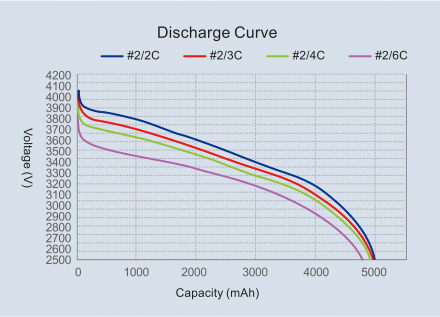
Lithium Battery Performance Testing & Validation

Our in-house laboratory covers the full scope of electrical performance validationófrom capacity and discharge rates to cycle life and accelerated aging—delivering reproducible data, traceable results, and comprehensive test reports.
Capacity & C-Rate Testing

Capacity & C-Rate Testing

Evaluate capacity retention and internal resistance under different temperatures and discharge rates. 

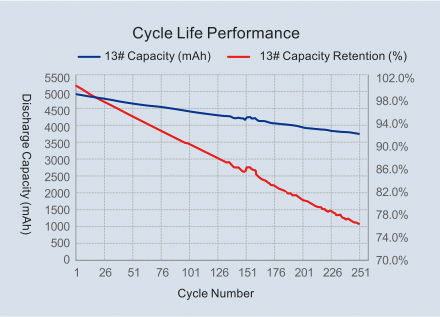
Cycle Life Testing

Cycle Life Testing

Multi-condition cycling tests with degradation curves and lifetime prediction (TTF – Time to Failure). 

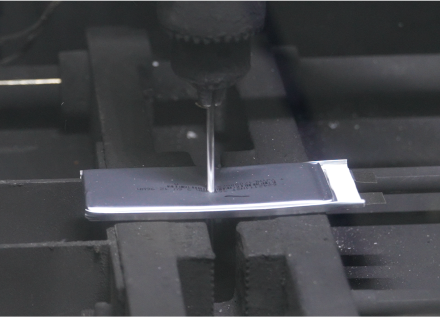
Safety & Abuse Testing

Safety & Abuse Testing

Simulation tests including short circuit, nail penetration, crush, and overcharge/over-discharge, in coordination with third-party certification bodies. 

FAQ

Can the capacity of a custom lithium battery cell be precisely tailored to my device requirements?

Yes. Capacity can be adjusted on demand, with tolerances controlled within ±3%, ensuring consistency for mass production.

By selecting specialized materials and optimizing BMS protection and thermal management strategies, we achieve a balanced design between high discharge rates and cycle life.

Depending on the cell chemistry, our solutions support discharge down to -40°C and charging down to -20°C. Corresponding test reports are provided.

We support certification testing such as UN38.3, IEC 62133, and UL, and provide third-party accredited test reports as required.

Use a charger designed for lithium-ion batteries, following the recommended voltage and current. Avoid overcharging or deep discharging.

 Nominal voltage is usually 3.6–3.7V per cell, fully charged voltage is 4.2V, and cut-off voltage is around 2.5–3.0V.

Yes, lithium-ion batteries are generally classified as dry-cell batteries because they use a non-liquid electrolyte.

Gel cells are lead-acid batteries with gel electrolyte, heavier and lower energy density. Lithium-ion cells are lighter, higher energy density, and longer lifespan.

Standard cylindrical sizes include 18650, 21700, 26650, while prismatic and pouch cells vary widely depending on design.

No, lithium-ion batteries are not wet-cell batteries; they use a non-liquid electrolyte, unlike traditional flooded lead-acid batteries.

Request Your Custom Lithium Battery Pack Evaluation

Tell us about your device and application needs.
We'll provide a tailored evaluation covering cell design, BMS strategy, structure, thermal management and safety engineering.